Your Cart
You are €100 away from free standard shipping.
Your cart is empty
You are €100 away from free standard shipping.
We cover all U.S. tariffs, so you won’t pay extra customs fees.
Washing linen clothes can be simple and stress-free when you know the right steps. Linen is a natural fabric made from flax fiber, valued for its strength, breathability, and relaxed texture. Because linen is a natural fiber, it responds best to gentle washing and mindful care. In this guide, you’ll learn how to wash linen clothes in a washing machine, protect the fabric, and keep your linen garments strong and comfortable for years.
With proper washing, pieces like linen dresses, linen shirts, and linen pants can last for many years when cared for correctly.
Linen is a plant-based material made from flax fibers. It is strong, breathable, and known for its durability. Linen fabric absorbs and releases moisture quickly, which helps linen clothes stay cool and fresh.
Flax fibers have low elasticity, which is why linen wrinkles easily. These natural wrinkles are part of linen’s character and give the fabric its distinctive texture and relaxed look. Different types of linen may react slightly differently to washing.
Linen is a strong natural fabric, but it reacts to heat, harsh chemicals, and aggressive washing cycles. Hot water can cause shrinkage, and strong detergents may weaken the natural fibers over time.
Using gentle washing settings helps protect the breathability, durability, and structure of linen clothes.
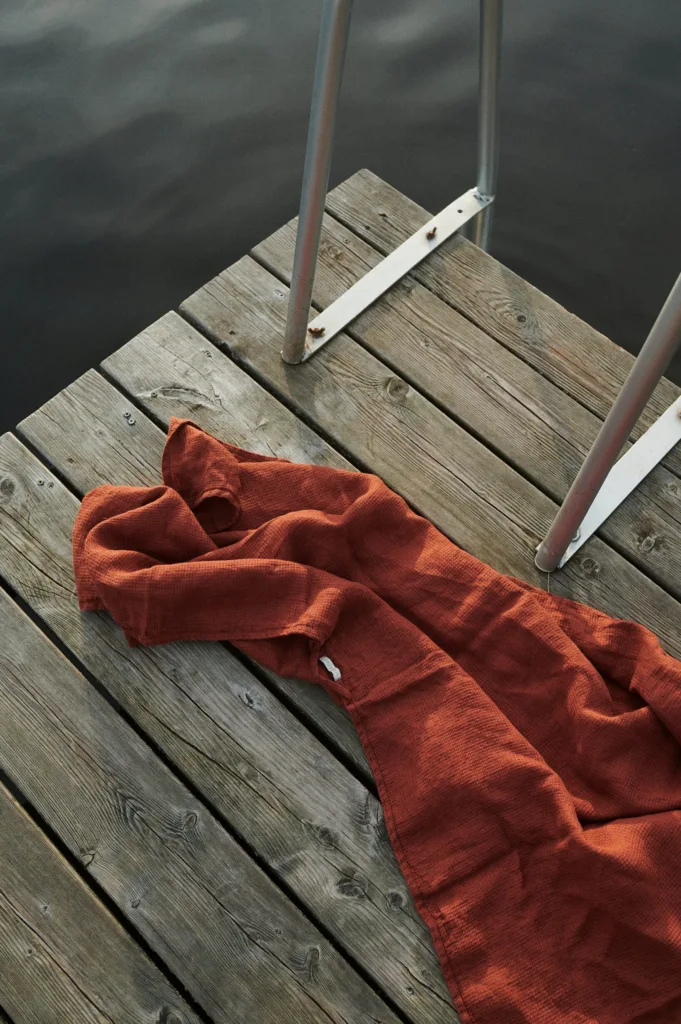
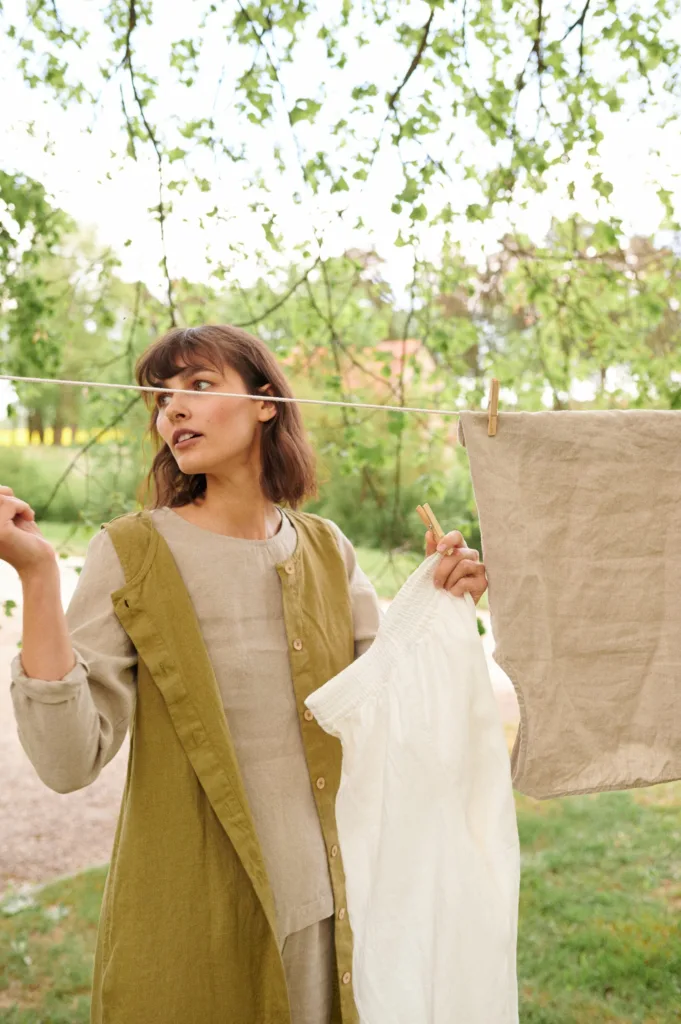

Always read the care label before washing linen clothes. The label briefly explains how the garment should be washed, which temperature is recommended, and whether tumble drying or ironing is safe.
Some linen fabric blends may require slightly different care. On Linenfox product pages, we include washing recommendations for every garment in the Material & Care section.
Separate white, light, and dark linen garments before washing. Newly dyed linen may release excess dye during the first few washes.
At Linenfox we work with several types of linen fabric and linen blends, and each one behaves slightly differently during washing. Washing medium-weight linen, heavy linen, and linen-wool blends separately helps protect the fibers and reduces unnecessary wear.
Grouping similar fabrics together also prevents excessive wrinkles and helps garments maintain their structure.
Stains happen, but they don’t mean your linen garment is ruined.
Rinse the stained area with cool water as soon as possible to prevent the stain from settling deeper into the fibers. Apply a small amount of mild detergent or soap directly to the stain and gently rub the fabric.
Avoid hot water, as it can set stains and increase shrinkage. Bleach should also be avoided because it can damage linen fibers and alter the fabric color.
Quick Linen Washing Summary
Choose the gentle or delicate cycle when washing linen clothes. These settings allow the fabric to move softly inside the washing machine, reducing friction and preventing excessive wrinkling.
Wash linen in cool or lukewarm water (30–40°C / 86–104°F). Lower water temperatures help maintain fiber strength and minimize shrinkage.
Give linen garments enough space inside the washing machine. Overloading the drum can cause deep wrinkles and unnecessary stress on the fabric.
Smaller loads allow linen to rinse and move freely.
Choose a mild detergent designed for natural fabrics. Gentle formulas clean linen effectively without damaging the fibers.
Using a gentle detergent helps linen clothes stay soft, strong, and comfortable for years.
Fabric softeners coat the fibers and reduce airflow within the fabric. Linen naturally becomes softer with each wash, so additional softeners are usually unnecessary.
Use oxygen-based bleach only when necessary and only on white linen. Avoid chlorine bleach and never use bleach on colored linen garments, as it may permanently change the fabric color.
Place linen garments loosely inside the washing machine. Avoid mixing linen with very heavy fabrics such as denim or thick towels.
Add the recommended amount of mild detergent to the dispenser. Liquid detergents dissolve easily and rinse out more effectively.
Using too much detergent may leave residue on linen fabric.
Remove linen garments from the washing machine as soon as the cycle ends. Prompt removal reduces wrinkles and prevents moisture from settling into the fibers.
Avoid wringing or twisting linen to remove excess water. Instead, gently shake the garment to release wrinkles and smooth the fabric.
Air drying is the best way to protect linen fabric. Linen dries quickly on its own, and natural drying helps maintain the fabric’s structure and breathability.
Hang linen garments on a wide hanger or lay them flat on a clean surface. If necessary, place the garment between two towels and press gently to absorb excess moisture.
Once the fabric is slightly damp rather than wet, hang the garment to finish drying naturally.
If you choose to use a dryer, select a low temperature setting (below 50°C / 122°F). Remove linen garments while they are still slightly damp.
Over-drying linen can make the fabric stiff and increase wrinkles.
Heavy linen fabrics and linen blends may take longer to dry, but they soften again during wear.
Linen is easiest to iron while slightly damp. Moisture relaxes flax fibers and helps smooth wrinkles quickly.
If the fabric has already dried, lightly mist it with water before ironing.
Steam irons or garment steamers work particularly well on linen fabric.
For delicate linen garments, place a thin cotton cloth between the iron and the fabric. With dark linen fabrics, ironing on the inside of the garment helps preserve the color.
Heavy linen fabrics may require more steam and slightly more time to remove wrinkles.
Keep in mind that linen naturally wrinkles again during wear — this is part of the fabric’s character.
Leaving linen clothes folded for long periods may create deep creases. Proper storage helps maintain the fabric’s shape and freshness.
Store linen garments in a cool, dry, well-ventilated area. Always ensure garments are completely dry before storing them.
Linen absorbs moisture easily, and trapped humidity may lead to mildew or odors.
Choose breathable storage materials such as cotton or linen garment bags. These fabrics allow airflow and help maintain the natural texture of linen.
Avoid plastic containers and sealed boxes that may trap moisture.
For long-term storage, refold garments occasionally to prevent permanent creases.
Washing too many items at once prevents linen garments from moving freely during washing. This may cause excessive wrinkling and unnecessary wear.
Strong detergents, chlorine bleach, and aggressive stain removers may damage flax fibers and weaken linen fabric.
Gentle cleaning products help preserve the durability of linen garments.
Untreated stains may settle deeply into linen fibers and become harder to remove later. Treat stains as soon as possible for the best results.
Linen is a strong yet sensitive natural fabric that benefits from gentle care. Washing linen clothes with mild detergent, avoiding harsh chemicals, and giving garments enough space in the washing machine helps preserve the fabric’s durability and breathability.
With proper care, linen fabric softens over time, keeps its structure, and develops the relaxed texture that makes linen clothing so special.
For more tips about caring for natural fabrics, see our linen care guide.
Yes, linen can be washed in a washing machine using a gentle cycle and cool or lukewarm water.
Linen can shrink if washed in hot water or dried at high temperatures.
A mild detergent designed for natural fabrics works best.


