Your Cart
You are €100 away from free standard shipping.
Your cart is empty
You are €100 away from free standard shipping.
We cover all U.S. tariffs, so you won’t pay extra customs fees.
Linen vs cotton are often placed in the same category as natural fabrics, but they behave very differently once they become clothing. The difference is not only in how they look, but in how they sit on the body, how they move, and how they feel after hours of wear.
The difference between linen and cotton becomes most noticeable in how a garment holds its shape. This is where the two fabrics begin to separate clearly.
Cotton tends to follow the body more closely, creating a softer and more uniform silhouette. It smooths over the form rather than defining it. Linen behaves differently. It holds its own structure, which allows the garment to keep a clearer shape instead of collapsing into the body.
This affects not only how the garment looks, but also how it feels to wear. Linen clothing often feel more open and less restrictive, while cotton feels more contained and stable against the skin.
Over time, this difference defines the overall experience of the garment — whether it adapts to the body or maintains its own form.
Linen and cotton behave differently because they come from two distinct types of plant fibres, each with its own structure and characteristics.
Linen is made from flax, a plant that grows tall and straight, often reaching around one meter in height. Its fibres develop inside the stem in long, strong bundles. These fibres are naturally thicker and less flexible, which gives linen yarn a more rigid structure from the beginning. When woven into fabric, linen tends to resist bending and collapsing, allowing garments to maintain a clearer shape.
Cotton, in contrast, comes from the soft fibres that surround the seeds of the cotton plant. These fibres are shorter, finer, and more flexible. This makes it possible to spin smoother, softer yarns that create a more even and uniform surface. As a result, cotton fabrics tend to follow the body more closely rather than holding a distinct form.
This difference at the fibre level shapes how each fabric behaves in clothing. Linen creates space and structure, while cotton feels softer and more adaptive. Both can hold shape, but they do so in different ways — linen through its natural rigidity, and cotton through a closer fit to the body.
The difference between linen and cotton becomes most noticeable over time, especially during longer periods of wear.
In warm conditions, linen tends to feel more open. The fabric does not sit tightly against the skin, which allows air to move more freely. This creates a lighter feeling throughout the day, particularly in garments with a looser cut. Cotton, by contrast, often stays closer to the body, which can feel softer at first but less dynamic as the day goes on.
Movement also highlights the difference. Linen responds more visibly — it shifts, creates folds, and changes shape with the body. Cotton feels more stable and consistent, holding a smoother surface but showing less variation in how it moves.
This contrast becomes especially clear during long days, travel, or situations where clothing needs to adapt to different environments. Linen tends to adjust more naturally, while cotton maintains a more fixed feel.
Over time, durability becomes an important factor. Linen, when properly cared for, is known for its longevity. The fibres remain strong and the fabric continues to soften with wear without losing its character. Cotton can also be durable, but it tends to wear differently, often becoming thinner over time depending on how it is used and washed.
The difference is not about one fabric being better than the other, but about how each one performs once it is worn beyond the first impression.
The way linen and cotton change over time is different, and it becomes more noticeable with regular wear and washing.
Linen gradually softens while keeping its underlying structure. The fabric becomes more flexible and comfortable, but it does not lose its shape. Instead, it develops a more relaxed surface while still maintaining the character of the garment. This is why linen pieces often feel better after being worn multiple times.
Cotton changes in a different way. It may feel soft from the beginning, but over time it can become thinner, especially in areas that experience more friction. The surface tends to stay smoother, but the fabric itself may lose some of its density depending on how it is used and cared for.
These differences come from the fibre structure. Linen fibres remain strong and stable over time, while cotton fibres are more prone to gradual wear in high-use areas.
Because of this, the aging process is not only about durability, but about how the garment evolves. Linen tends to develop character, while cotton tends to maintain a more uniform look as it wears.
Beyond fibre type, fabric weight plays a major role in how both linen and cotton feel and perform in clothing.
Lighter fabrics tend to feel more open and fluid. In linen, this creates a more relaxed and airy effect, where the garment moves easily and feels less structured. In cotton, lighter weights often feel softer and closer to the body, creating a smoother and more uniform surface.
Heavier fabrics behave differently. Heavier linen develops a more defined shape and holds its structure more clearly, making it suitable for garments that need more stability. It feels denser and more substantial, while still allowing movement. Heavier cotton also gains more structure, but it tends to remain more compact and less responsive compared to linen.
Fabric weight also affects how a garment works in different conditions. Lighter fabrics are more suitable for heat and movement, while heavier ones can feel more balanced in cooler weather or in pieces that require a stronger silhouette.
Because of this, choosing between linen and cotton is not only about the fibre, but also about how the fabric is developed. Weight changes how the material behaves, how it feels on the body, and how it fits into different types of garments.
Linen and cotton are often compared as separate fabrics, but in some cases, they work better when combined.
Each material has its strengths. Linen brings structure, openness, and a more defined shape, while cotton adds softness and a smoother surface. When used together, these qualities begin to balance each other.
This becomes especially noticeable in garments that need both structure and ease. Pure linen can sometimes feel too rigid for certain uses, while cotton alone may not provide enough shape. A combination of the two creates a more controlled result, where the fabric feels stable without becoming stiff.
The balance between the fibres also affects how the garment behaves throughout the day. It can reduce some of the sharper creasing associated with linen, while still maintaining a natural texture and movement.
Rather than choosing between one or the other, combining linen and cotton allows the fabric to take on a different role — one that sits between softness and structure, adapting more easily to different uses.
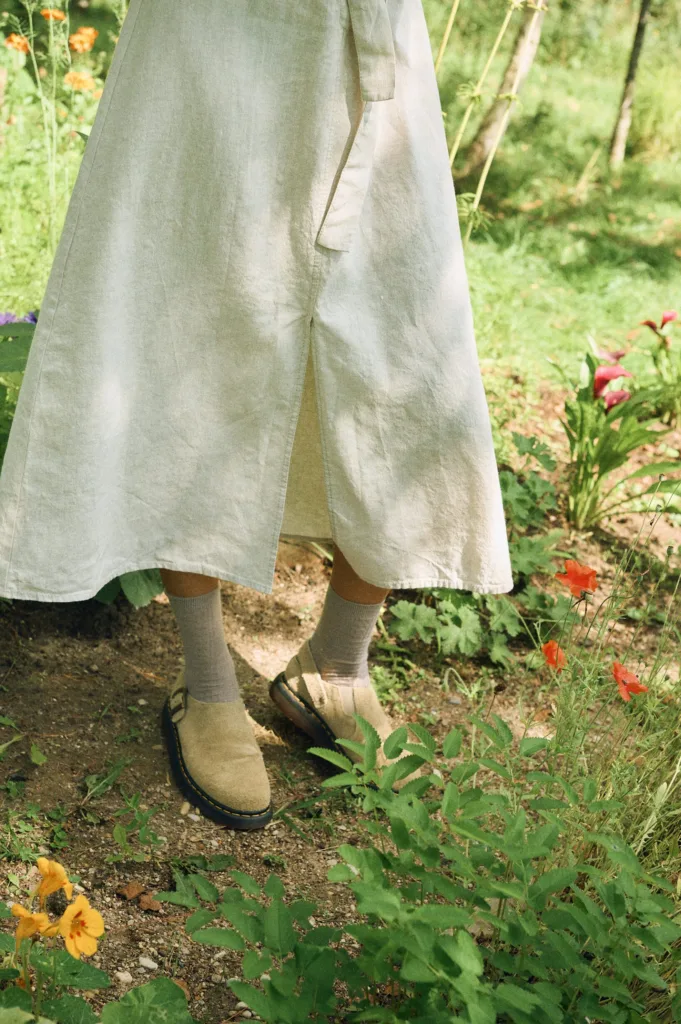
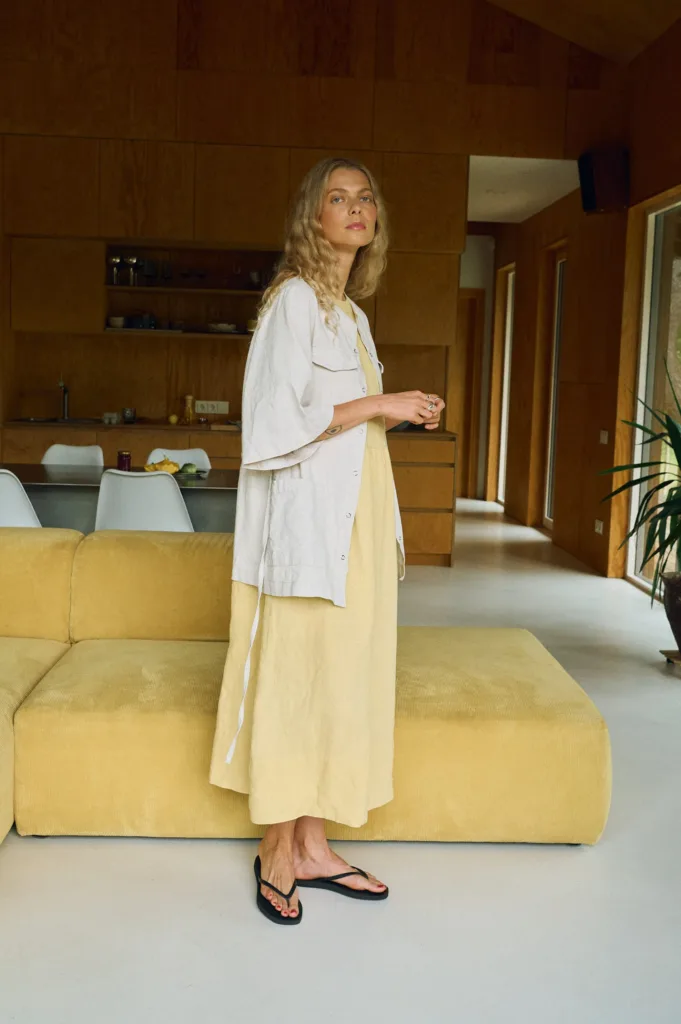
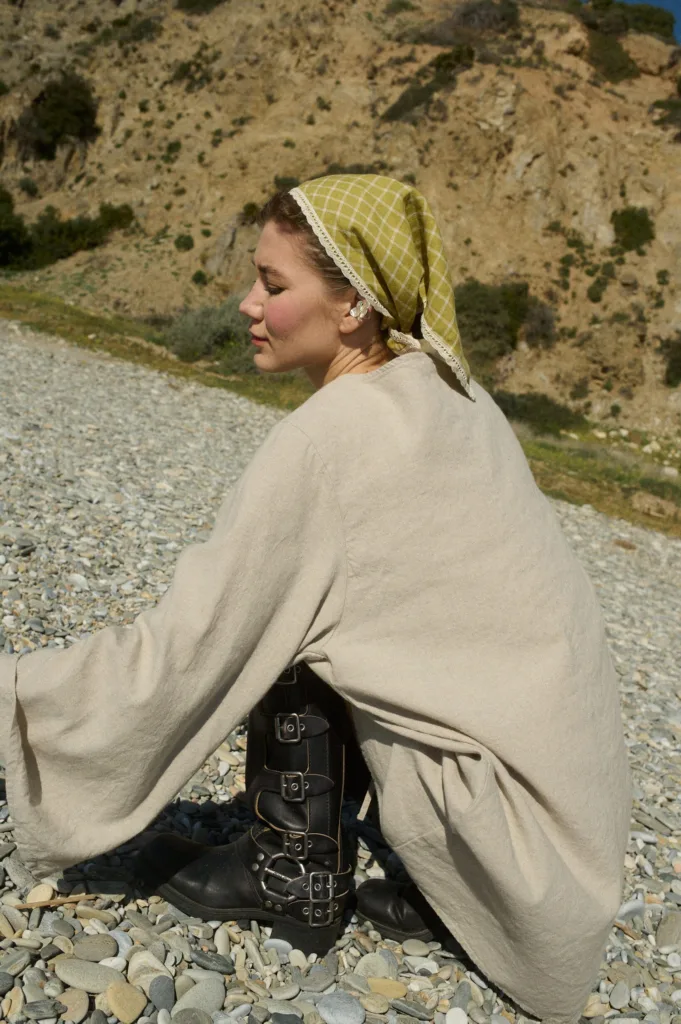
Working with both linen and cotton made it clear that each fabric solves a different problem, but also leaves certain gaps. Linen offers structure and a more defined shape, while cotton brings softness and a smoother surface. In some garments, relying on only one of them can feel limiting.
This is where a linen–cotton blend fabric becomes relevant. By combining the two fibres, it is possible to retain some of the structure of linen while introducing a softer, more controlled feel. The result is a fabric that sits differently on the body — less rigid than pure linen, but more defined than cotton alone.
One of the most noticeable differences is how the fabric behaves over time. The blend tends to crease less sharply than linen, while still maintaining a natural texture. It also feels more stable throughout the day, especially in garments that require a clearer shape without becoming too stiff.
At Linenfox, this led to the development of a dedicated linen–cotton blend collection, where the fabric is used in pieces that benefit from both structure and ease. The aim was not to replace linen or cotton, but to create an option that sits between them — adapting more easily to different uses and preferences.
From our own experience, this has become one of the most appreciated fabrics in the studio. It combines structure with softness and requires less effort to maintain throughout the day. While it is still being discovered by many customers, it is gradually finding its place as a reliable option for those looking for a balance between the two.
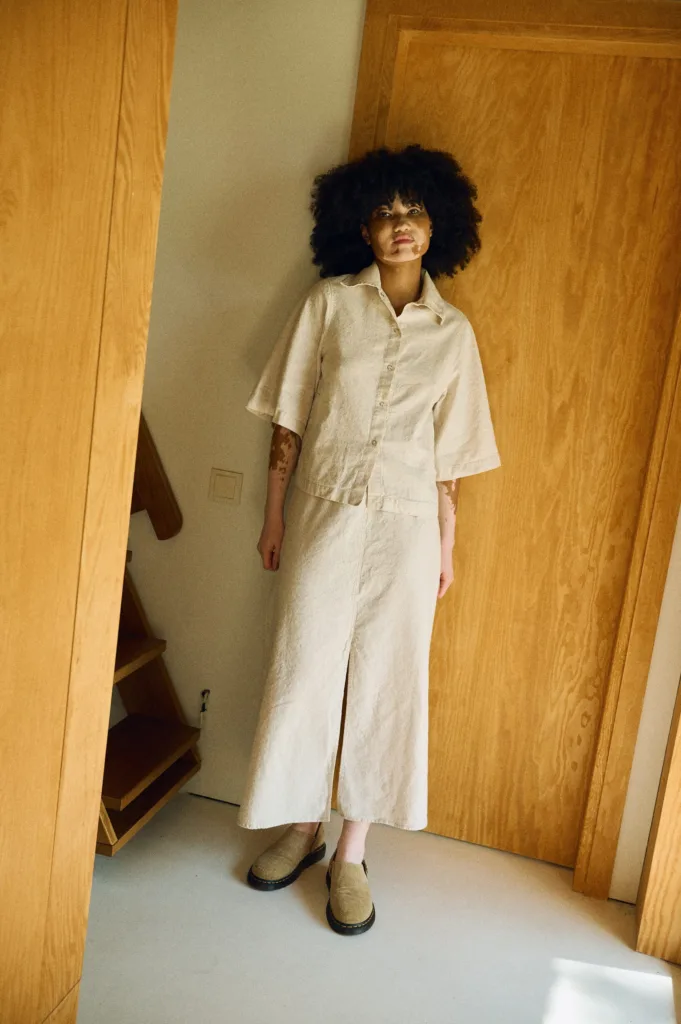
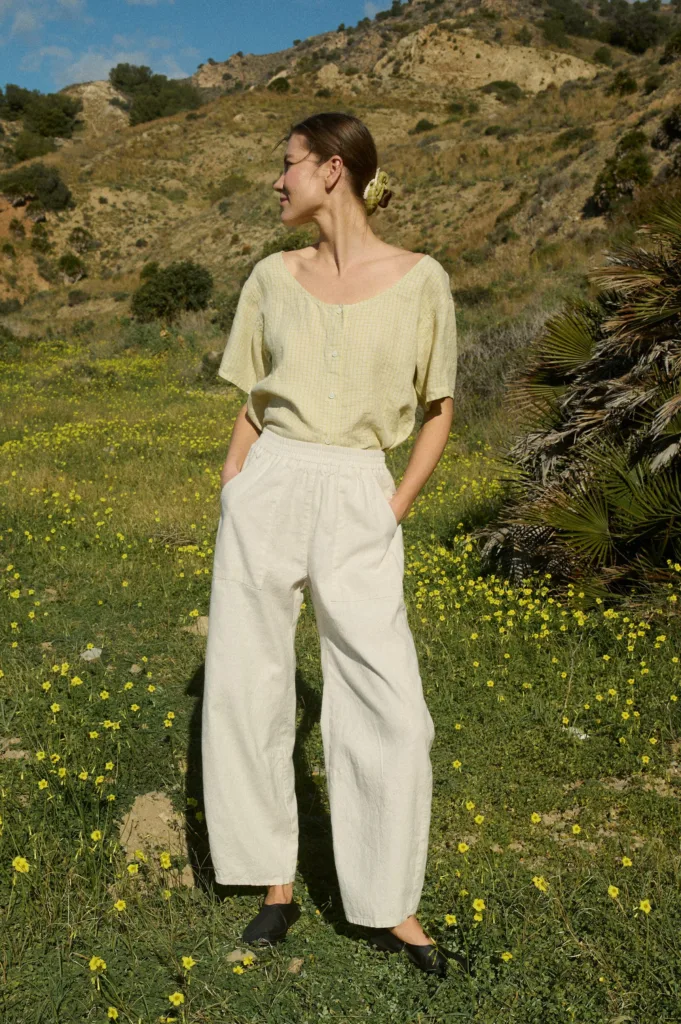

Choosing between linen, cotton, and blends is less about comparing fabrics and more about understanding what you expect from the garment.
If you are looking for more structure, movement, and a garment that holds its own shape, linen tends to be the natural choice. It creates space and feels more responsive to how it is worn.
If softness and a closer feel to the body are more important, cotton may feel more comfortable. It tends to sit more evenly and requires less adjustment in how it is worn.
Blends sit between the two. They are often the most practical when you want a balance — a fabric that feels more controlled than linen, but still keeps some of its structure without becoming too soft or flat.
In many cases, the decision comes down to how the garment will be used rather than the fabric itself. The same piece can feel completely different depending on the material it is made from.
Neither fabric is better overall. Linen and cotton serve different purposes. Linen offers more structure and openness, while cotton feels softer and sits closer to the body. The choice depends on how you want the garment to feel.
Yes, linen tends to crease more visibly because of its fibre structure. However, these creases are part of its natural texture. Cotton wrinkles less sharply, especially in smoother fabrics.
A linen–cotton blend combines structure and softness. It tends to wrinkle less than pure linen while maintaining more shape than cotton, making it a balanced option for many types of garments.


